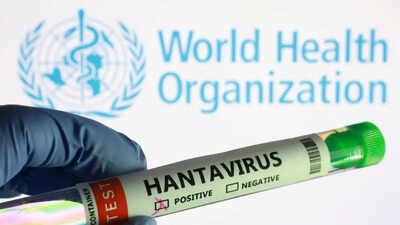
NEW DELHI: As the World Health Organization on Sunday declared the Ebola outbreak in Congo and Uganda a Public Health Emergency of International Concern (PHEIC), Indian health experts said there is no reason for panic as Ebola does not spread like Covid-19, though vigilance and early detection remain crucial.Health ministry officials said no Ebola case has ever been reported in India except one international traveller who was tested positive in 2014. the National Centre for Disease Control is closely monitoring the situation.Former AIIMS director Dr Randeep Guleria said Ebola spreads through direct contact with infected body fluids, blood, vomit, secretions or contaminated material, unlike Covid-19 which spreads through routine droplet transmission.“There is no need to panic,” Guleria said, adding that Ebola requires close physical contact for transmission and is therefore unlikely to trigger a pandemic like Covid-19.Recalling India’s preparedness during the 2014 Ebola outbreak, Guleria said authorities had conducted workshops and screening exercises across the country. He also referred to an Indian traveller returning from Sierra Leone who was isolated in Delhi after recovering from Ebola because body fluid samples tested positive for viral particles. The person remained under isolation for nearly three months as a precautionary measure, though no transmission occurred.Guleria said Ebola outbreaks are often linked to infected fruit bats or wild animals and can also spread during the handling of infected bodies. He stressed that screening travellers from affected regions and monitoring them during the incubation period of up to 21 days remain critical.Experts said India has the laboratory capacity to rapidly detect Ebola through specialised RT-PCR testing at designated centres under the Indian Council of Medical Research and NCDC, though early clinical suspicion and quick reporting remain essential.“The overall risk remains low, but in today’s interconnected world, infectious outbreaks are literally just a flight away,” Dr Neeraj Nischal, Prof of medicine at AIIMS, said, underlining the importance of airport surveillance, travel screening and emergency response systems.He said Ebola patients generally become infectious only after symptoms begin, particularly when fever, vomiting, diarrhoea or bleeding develops. Healthcare workers and caregivers are at greater risk without adequate protective equipment and infection-control practices.Nischal added that early Ebola symptoms can resemble other febrile or viral illnesses, making travel and exposure history crucial for diagnosis. He said contact tracing remains one of the most effective ways to stop transmission and noted that lessons from Covid-19 — including surveillance, rapid testing and hospital preparedness — have strengthened India’s outbreak response capacity.“Public cooperation, honest reporting of travel history and timely medical consultation are key to preventing outbreaks from escalating,” he said.