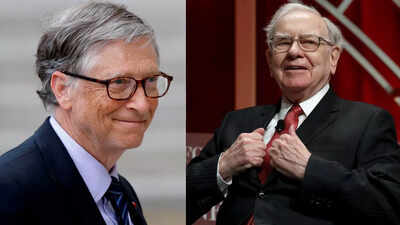
Top leaders like Bill Gates and Warren Buffett learned a crucial lesson by working behind a Dairy Queen counter. This hands-on experience revealed operational realities often missed by senior management, highlighting how distance from the ground floor can compromise decision-making.
One of the fundamental principles of career advancement in any field is that the higher one rises up the hierarchy of management, the farther one tends to get from the ground reality. One no longer has to deal with the nitty-gritty of client grievances, poor-quality software, or operational inefficiencies. Rather, one starts looking at one’s own organisation through the prism of neatly structured tables, presentation slides, and executive briefs. While such distance may seem like an understandable privilege earned by one’s achievements, it creates an occupational myopia that is potentially hazardous. When one stops comprehending the nature of the work done on the front lines, one’s ability to make informed decisions becomes compromised.But when the two richest men in the world, Bill Gates and Warren Buffett, were seen entering a Dairy Queen branch in Omaha as part of a Berkshire Hathaway Shareholder’s weekend, one could not help but think that it was nothing but corporate promotion at its finest. The two men, dressed in red aprons, took up positions behind the counter for a quick-service job experience. An episode recorded in their Gates Notes blog and on YouTube saw them having to learn to use the cash register, take orders, and even flip over Blizzard treats without damaging them.While the visuals were certainly funny, the behaviour showcased a lesson in proximity to operations. Rather than acting as ceremonial visitors delivering a speech, they were acting as new trainees learning how to handle the flow of customers. By allowing themselves to be coached on techniques and led through an experience by the restaurant’s staff, they learned a crucial leadership lesson: leave the comfort zone behind and see reality firsthand.Why summary data can be misleading to even the best leadersIt is precisely for this reason that this particular exercise was so important, because the details become increasingly vague as data moves higher up within an organisation. In one case, a regional manager may say that the operation is running like clockwork; in another, a technology director may claim that updates have been completed efficiently. But what those statements fail to capture are all of the small inconveniences, awkward processes, and problems employees face every day.This corporate disconnect is a well-documented phenomenon. In an extensive executive study published in the Harvard Business Review titled Why Leaders Lose Their Way, researchers analysed how isolation sets in as managers become more senior. The study highlights that organisational filters often surround people in authority. Subordinates tend to tell them what they want to hear, and metrics are frequently aggregated to highlight successes while smoothing over daily operational friction.In stepping behind the fast-food counter, Gates and Buffett were able to bypass the entire system of organisational filters completely. They found themselves in a situation where the people of lower formal status knew what was really going on. Going into such a situation without trying to exhibit superiority is one way to realign your perspective so that your company’s optimistic ideals don’t close your eyes to reality.

Senior leaders often lose touch with daily operations. This disconnect can lead to poor decision-making. Maintaining proximity to front-line work helps leaders understand real challenges.
Putting the ground floor back into your calendarYou don’t have to be an owner of a fast-food chain or organise a grand event to develop this particular habit in your professional life. The practical application of front-line proximity is incredibly simple and doesn’t require any tricks at all. All it takes is a determined effort to spend time observing a task or job that you wouldn’t normally do yourself.By observing the fine details of everyday work firsthand, leaders can avoid the blind spots that come with seniority. Managers who maintain an active, firsthand understanding of customer-facing or back-end operations consistently make faster, more accurate strategic adjustments. They catch emerging problems months before those issues finally show up as a negative trend on a corporate spreadsheet.To turn this into a routine, set aside time once every quarter to step completely out of your usual workspace. You can sit in on a customer service queue, shadow a new employee orientation, or walk through the exact digital or physical steps a customer takes to buy your product. The secret to making this exercise work is to ask a single question afterwards: What slows our people down that has become completely invisible to the upper office? Once you identify that point of friction, pick one small piece of it and fix it immediately. Taking fast action proves that the exercise was not just an empty exercise in corporate empathy, but a genuine effort to make the workflow better.In essence, the key learning point within the Dairy Queen experience is that success breeds the exact same distance that will one day kill it. Humility within a professional environment cannot be achieved by making lofty claims about corporate culture from an office far removed from actual business realities. It must keep you grounded in your instincts, connected to reality, and too close to manipulate your understanding of it.