





“Beta, paise ped par ugte hain kya?”Almost every Gen Z has heard this at least once, whether while ordering that expensive K-beauty product or clicking “buy now” on those must-have sneakers.Generation Z, the ‘fam’ that treats a 10-step skincare routine like a basic life skill, coffee runs like a non-negotiable ritual, and concerts like therapy sessions with better lighting, has older generations seriously side-eyeing their spending habits.While millennials were busy clipping coupons, chasing discounts, and saving up for life’s big milestones, Gen Z has mastered the art of indulging in life’s little luxuries, from skincare hauls and sneaker drops to matcha fixes and last-minute “because why not?” plans.But this is also the generation opening SIPs with internship money, tracking mutual funds on their phones, experimenting with crypto before fully decoding fixed deposits, building side hustles while still in college, using budgeting apps to manage rent, and picking up stock-market basics straight from Instagram reels.This is where Gen Z looks different. They may spend faster, but they are also learning about money earlier. Unlike millennials, who mostly follow more traditional saving habits, Gen Z is growing up in a world where investing, budgeting, and wealth-building are often just a few clicks and apps away.

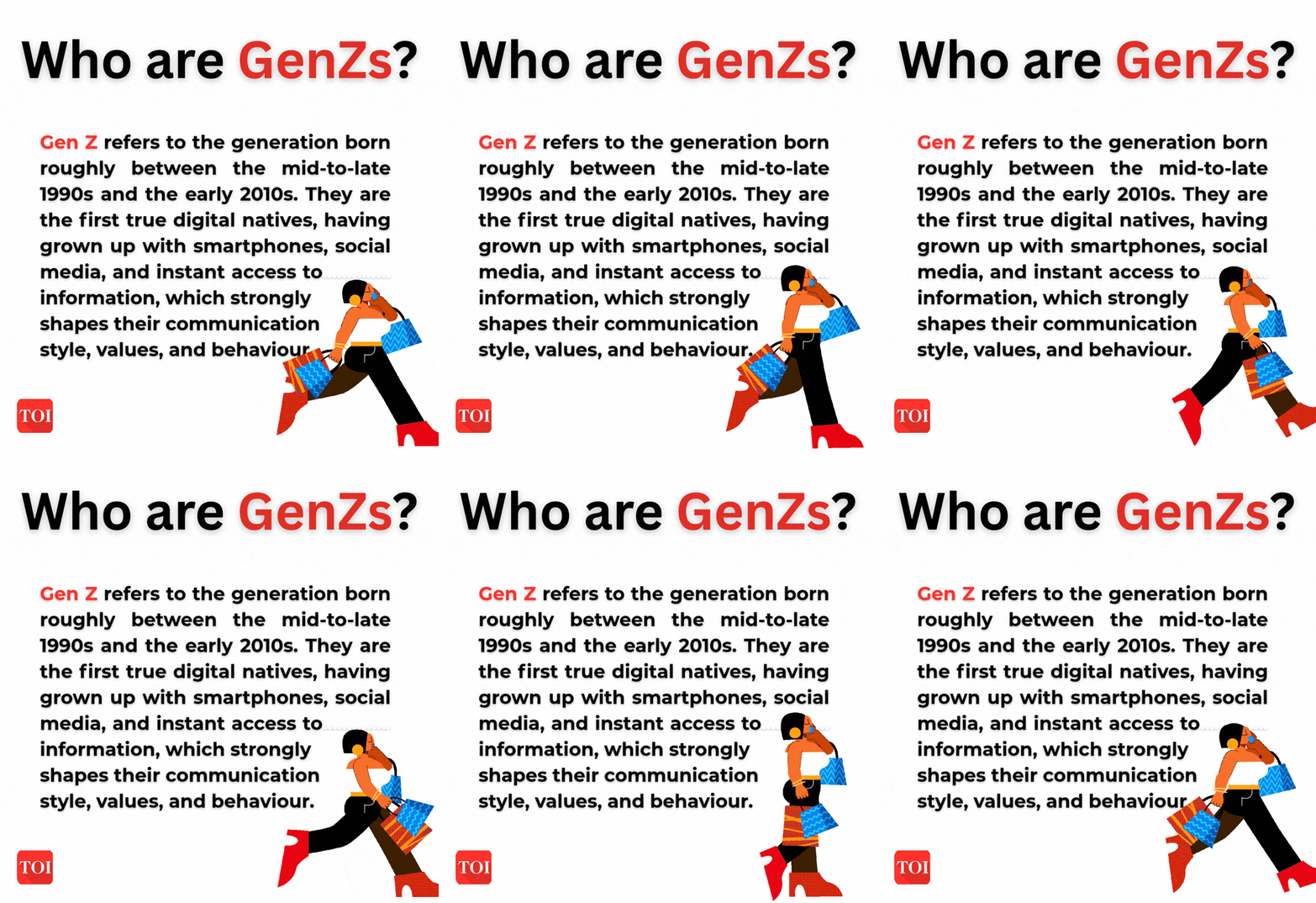
Still, Gen Z’s relationship with money is not simple. It is smart, but sometimes impulsive. Planned, but often driven by trends. They are saving and spending, investing and experimenting, all at the same time.Now, the world is moving toward the “great wealth transfer,” with an estimated $83 trillion expected to pass down over the next 20–25 years, according to the UBS Global Wealth Report 2025.And the bigger question: Is Gen Z actually smart with money?
India’s 400-million-strong Gen Z wave
In India, Gen Z means staggering 377–400 million people, making it one of the largest youth populations in the world. Meaning that roughly one in every three-four Indians is part of this swipe-savvy, digitally native squad.So no, this is not just a technologically advanced mass, but an economic powerhouse, running on Wi-Fi, wallets, watchlists, and just enough ‘delulu’ to believe that they can buy concert tickets, invest in SIPs, and still make rent.According to Deloitte, Gen Z already makes up over 27% of India’s population with more and more entering the workforce or entrepreneurial landscape.At present, the generation directly contributes around $200 billion to India’s consumer market, but its indirect household influence is even larger around $860 billion in spending decisions, according to a report by BCG and Snapchat.Less than a decade later, by 2035, Gen Z could account for 46% of India’s total consumer spending, nearly $1.8 trillion.This means even before reaching peak earning years, Gen Z is already influencing:
- What families buy
- Which apps households use
- Where money is invested
- Which brands scale
- How banks and fintechs design services
What shaped Gen Z’s money game
Every generation’s financial DNA is shaped by the world it inherits.For Gen Z, that world has been uniquely chaotic.
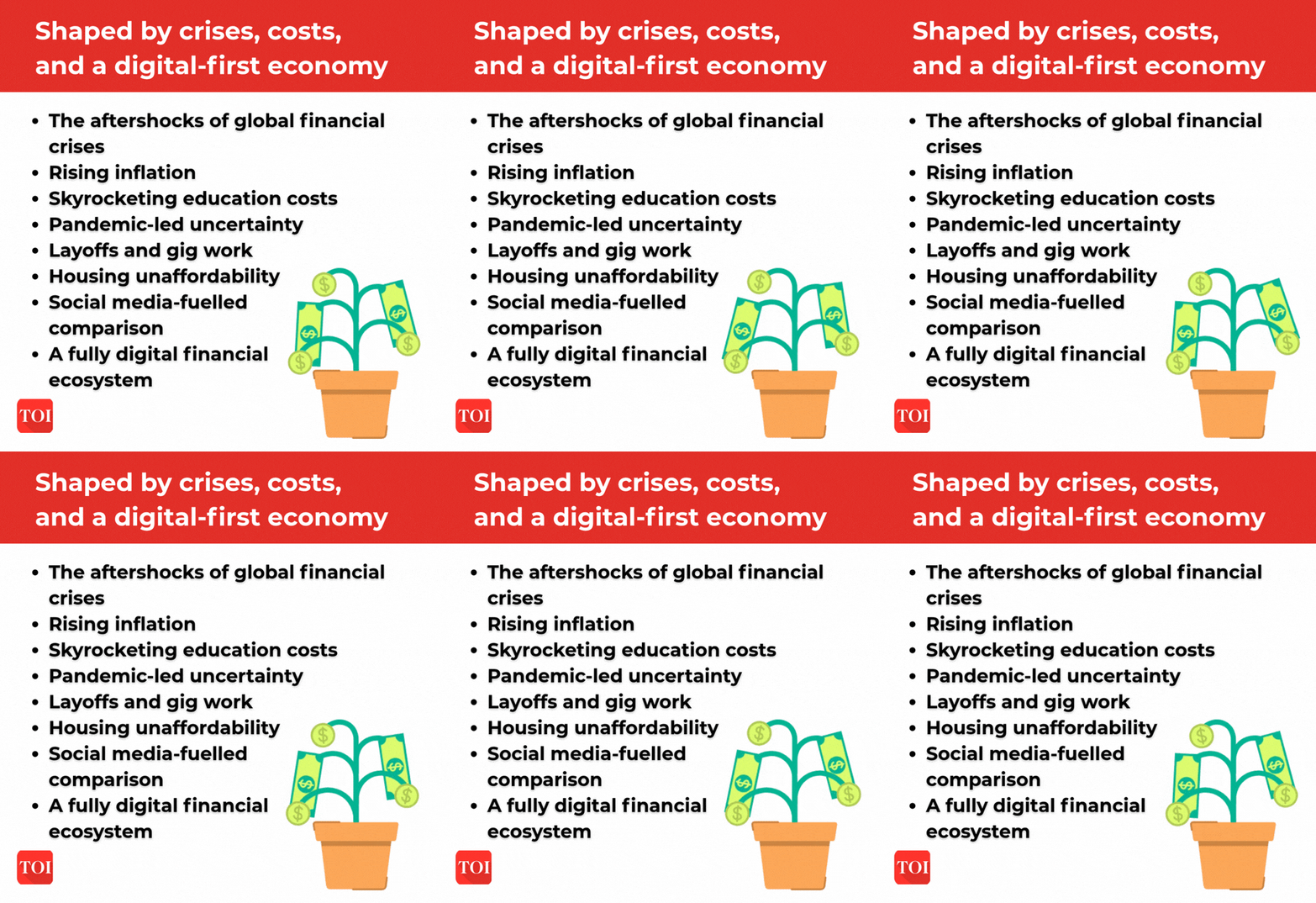
Unlike previous generations, many Gen Z individuals are deeply aware that stable jobs, pensions or easy home ownership are no longer guaranteed.This has created what experts often describe as a “defensive but questioning” approach to money.They are more financially conscious because they feel they have to be.The World Economic Forum’s 2024 Global Retail Investor Outlook captures this shift: around one-third of Gen Z globally began investing during university or early adulthood, double the rate of millennials at the same age.Even more striking, over 50% of Gen Z respondents said they began learning about investing before entering the workforce, compared to just 20% of baby boomers.India reflects this trend. A BCG report found that more than 60% of Indian Gen Z respondents save regularly, while around 35% begin investing before age 25.This generation is not waiting for “financial maturity” to arrive in its 30s. It is trying to manufacture it in its teens and twenties.
The smartphone became Gen Z’s first financial advisor
Perhaps the biggest difference between Gen Z and every generation before it is not attitude towards money, it is access. Money, markets, and financial decisions are no longer locked behind formal meetings or paperwork. They are quite literally in the palm of the hand, available 24/7, one tap away.Gen Z’s first introduction to finance comes from a phone, a screen that doubles up as a teacher, advisor, and trading terminal. Whether it is a notification about a new SIP reminder, a viral reel explaining mutual funds, or a push alert from a trading app, financial literacy is now arriving in real time, not retirement seminars.
Every generation has a nuanced approach towards Money. Previous generations were cautious, Millennials are more prudent investors and Gen Z are more aggressive risk-takers borderline chance-seekers!
Mohit Gang, CEO, Moneyfront
This generation has grown up with UPI, budgeting apps, SIP platforms, stockbroking apps, crypto exchanges, AI-powered investment tools, BNPL products, and creator-led finance explainers all coexisting in the same digital ecosystem. For Gen Z, investing can feel as frictionless as ordering coffee, quick, intuitive, and increasingly normalised as part of everyday life.And that ease matters.According to the World Economic Forum, Gen Z is significantly more likely than older generations to invest in complex financial products such as crypto or alternative assets.In fact, for 71% of Gen Z crypto investors globally, crypto makes up more than one-third of their portfolio.In India, the appetite for aggressive financial participation is also visible. More than half of new SIP accounts are reportedly being opened by investors below 30, signalling a willingness to engage with traditional wealth-building tools.But here is the twist: many younger investors are not just buying balanced index funds. They are increasingly exploring:
- Sectoral mutual funds
- Thematic bets
- Small caps
- F&O
- Day trading
- Crypto
- Prediction markets
So yes, Gen Z is investing younger, but often with a significantly higher appetite for risk.
Finance bros next click: Finfluencers, finance apps and the reel economy
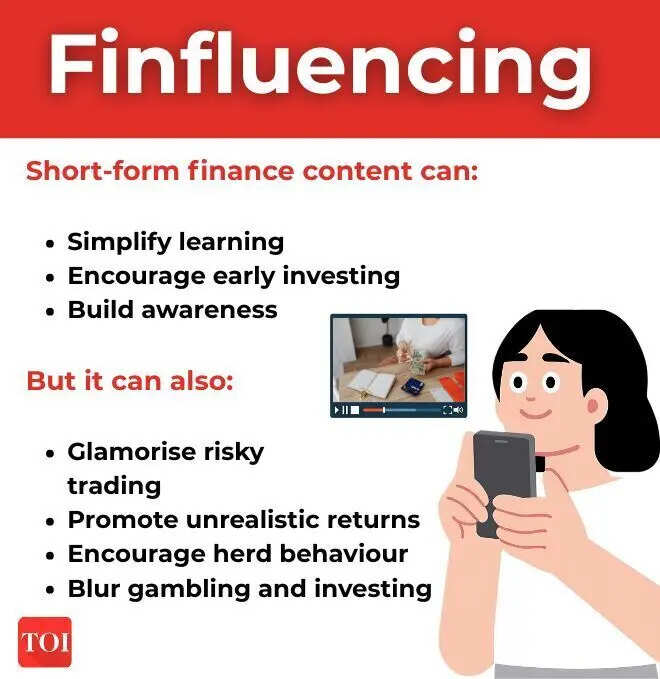
Personal finance is no longer something that comes neatly packaged from classrooms, textbooks, or the occasional “adulting lecture” from elders. Instead, it is being picked up in the most 21st-century way possible, scrolling through Instagram, YouTube Shorts, and finance reels between memes and music drops.Social media hasn’t just changed financial literacy, it has completely rewritten the rulebook. Finance is no longer an elite language spoken in boardrooms, it is now bite-sized, viral, and sometimes dangerously oversimplified. However, the “quick easy rich” route isn’t that simpleMohit Gang, CEO of Moneyfront, captures this shift with a sharp warning. “Gen Z is getting addicted to betting sites, prediction markets, gaming apps, F&O and crypto platforms. They want everything quick and now,” he said. This is a generation that prefers speed over patience and convenience over complexity, often operating through digital “all-in-one” apps that bundle everything from investing to trading in a single swipe. These platforms, he points out, don’t just enable behaviour, they actively shape it through nudges, push alerts, and promotions designed to keep users constantly engaged in the financial loop.Gang also highlights the real engine behind this behaviour shift: short-form content.“Gen Z is hugely getting influenced by YouTube Shorts and Instagram Reels. They aren’t so much into long-form podcasts but are spending a lot of time on anything which is served quickly in short-form with concrete actionable,” he explained. The problem is that when financial advice comes wrapped in 30-second clips and catchy hooks, it becomes just as easy to misunderstand as it is to consume. The result? A generation that is informed, but sometimes dangerously overconfident and exposed to get-rich-quick temptations.Financial planner Rohit Shah told TOI “Some of these may end up wrongly advising Gen Z as existing regulations are not effective in regulating influencers,” he notes. In other words, the financial influencers shaping Gen Z’s money mindset are often operating in a space that is far more viral than verified.In a world where finance advice is often packaged like entertainment, discernment becomes critical.
Trust issues: Why Gen Z doesn’t automatically believe traditional institutions
Despite being deeply engaged with money, Gen Z is not blindly trusting of traditional financial systems.Nearly 20% of Gen Z non-investors globally say they avoid investing because they do not trust financial institutions.This is a huge shift.Rather than rejecting money or financial systems altogether, Gen Z is essentially re-routing its trust. Instead of relying on traditional markers like legacy institutions or brand reputation, this generation places greater value on security, transparent fee structures, intuitive and easy user experience, strong data privacy protections, community validation, and personalised financial services that feel tailored to individual needs rather than mass offerings.This generation is more comfortable than older cohorts sharing financial data with fintechs, AI tools and even digital platforms if the value exchange feels clear.More than 40% of Gen Z globally says they are comfortable with AI managing investments.That statistic alone signals how radically trust has shifted, from institutions to interfaces.
Gen Z’s money equation
Gen Z is earning money in a very different way compared to earlier generations. Along with regular jobs, they are stacking up side hustles like freelancing, creator-led work, affiliate marketing, online tutoring, reselling and entrepreneurship. This gives them multiple income streams at a pretty early stage of life, something previous generations usually didn’t experience so soon. It clearly speeds up their entry into financial independence.Shah believes Gen Z is doing better with money than most earlier generations. “Internet savvy, independent opinion, higher disposable income makes most of them significantly better on money matters,” he said. He also added, “Gen Z is certainly earning well and building real wealth. Many of them have also managed to get into sizable compensation, given their credible education.”But the big question remains: are these side hustles actually building wealth or just helping them keep up with expensive lifestyles?Gang said, “Side hustles are always good if it’s prudently invested. Ideally, these side incomes should help them build good long term wealth,” he said. However, he added a reality check: “But in many cases this is getting spent in luxuries or avoidable expenses. However, it will also be prudent to acknowledge that these side-hustles are helping a lot in maintaining the expensive lifestyles of GenZ.”On the broader comparison between generations, Gang said that money behaviour changes with time. Previous generations were more cautious, Millennials are more structured and prudent investors, while Gen Z tends to be more aggressive risk-takers, sometimes even bordering on chance-seekers.

How to up the money game?
Gen Z is earning early and fast, but wealth-building needs more than just income streams and high-risk bets. Alongside rising financial awareness, there is also growing confusion driven by quick-money trends and social media advice. Here are some simple habits and common mistakes that can help them shift from short-term gains to long-term financial stability.
- Gen Z should focus on simple financial habits that build long-term stability and “serious wealth”, instead of treating money like “play money”. The key is consistency and patience, not quick wins.
- One major mistake many are making is ignoring basic safety nets like proper insurance and an emergency corpus, which leaves them financially exposed.
- Another common trend is chasing “get rich quick” ideas through aggressive stock bets and cryptocurrencies without first building a strong financial base.
- Many are also skipping the slow, steady path of wealth creation and instead trying for high-risk, high-reward outcomes too early.
- A better approach is to split finances into two parts: strategic and tactical. Tactical money can go into current needs and short-term goals, while strategic money should focus on long-term wealth building.
- The strategic side should include proper asset allocation, emergency savings, SIPs, balanced mutual funds, and long-term equity investments.
- Most importantly, Gen Z needs to step back from the noise of short-form financial advice on reels and “finfluencers” selling quick fixes, and instead focus on disciplined, long-term planning.
The bottom line — Are Gen Zs smart with money?
The answer is largely yes, but with nuance. Shah believes Gen Z has an edge because “internet savvy, independent opinion, higher disposable income makes most of them significantly better on money matters,” giving them early exposure and confidence in handling finances.However, Gang adds perspective, saying every generation plays the money game differently, older generations were more cautious, Millennials became more structured investors, while Gen Z tends to be more aggressive and risk-taking, sometimes even bordering on chance-seeking.Gen Z isn’t exactly careless with money but they are also not fully disciplined in the traditional sense.They are the first generation to learn, earn, and invest all at once through a smartphone-driven world of SIPs, side hustles, trading apps and finfluencer advice. This makes them quick, curious, and far more financially active at a young age than any generation before.But that speed comes with a flip side. Alongside early investing and multiple income streams, there’s also impulsive spending and a strong pull towards high-risk, trend-driven bets. So Gen Z despite being “smarter” with money are still figuring out how to balance fast financial action with slow, steady wealth building that actually lasts.
Millennials are more believers in long term compounding via SIPs in Mutual funds and also investing in a mix of different financial instruments. Gen Z on the other hand aren’t saving for emergency requirements but rather betting the house on F&amp;amp;O and equity trading. Financial planning is not a concept which most Gen Z can relate with.
Mohit Gang, CEO, Moneyfront
The bottom line — Are Gen Zs smart with money?
The answer is largely yes, but with nuance. Shah believes Gen Z has an edge because “internet savvy, independent opinion, higher disposable income makes most of them significantly better on money matters,” giving them early exposure and confidence in handling finances.However, Gang adds perspective, saying every generation plays the money game differently, older generations were more cautious, Millennials became more structured investors, while Gen Z tends to be more aggressive and risk-taking, sometimes even bordering on chance-seeking.Gen Z isn’t exactly careless with money but they are also not fully disciplined in the traditional sense.They are the first generation to learn, earn, and invest all at once through a smartphone-driven world of SIPs, side hustles, trading apps and finfluencer advice. This makes them quick, curious, and far more financially active at a young age than any generation before.But that speed comes with a flip side. Alongside early investing and multiple income streams, there’s also impulsive spending and a strong pull towards high-risk, trend-driven bets. So Gen Z despite being “smarter” with money are still figuring out how to balance fast financial action with slow, steady wealth building that actually lasts.


