


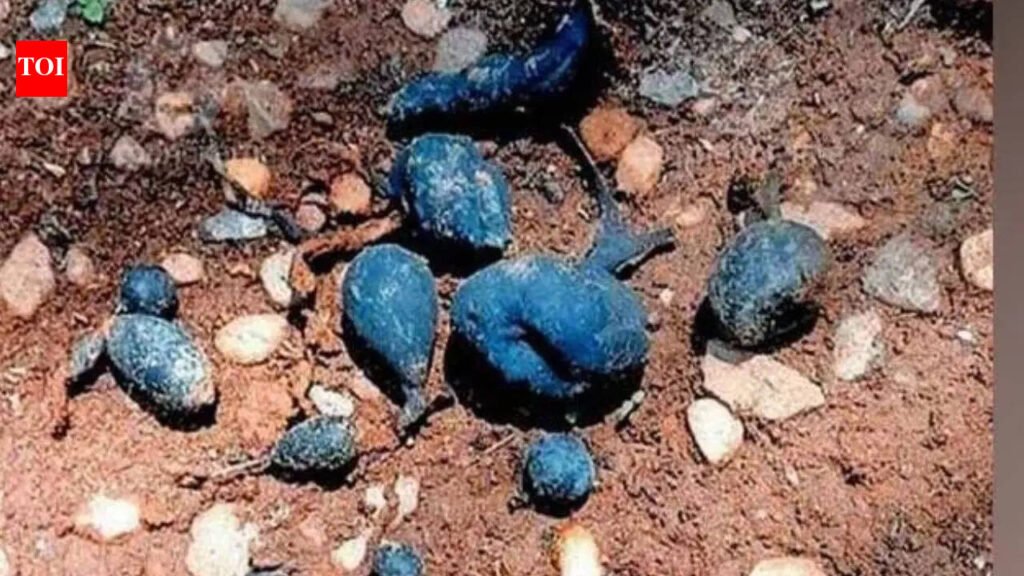

A strange underground discovery in Kerala’s Palakkad district has suddenly drawn attention from scientists, biodiversity researchers, and even people interested in traditional medicine. In the village of Karakurussi, a farmer digging land for cultivation reportedly uncovered several unusual mushroom-like structures hidden beneath the soil. At first glance, they did not look especially remarkable. Yet researchers later identified them as Sclerotium stipitatum, a rare subterranean fungus locally known as “Nilamanga” or “Earth Mango”, as reported by the Kerala local news.The name itself sounds misleading. It almost suggests some forgotten variety of fruit buried underground. In reality, this is a rare fungus that grows secretly beneath the soil surface, often in areas rich in termite activity. Researchers say discoveries like this are becoming increasingly uncommon, partly because underground fungi remain poorly studied across India. Some experts even believe many species could disappear before science properly documents them.
Rare ‘Earth Mango’ discovered underground reveals hidden fungal species
As reported by Onmanorama, the organism discovered in Karakurussi was identified as Sclerotium stipitatum, a little-known subterranean fungal species. Reports suggest that around 20 underground fungal structures were recovered from the site during the digging process.Unlike ordinary mushrooms that appear above the soil after rainfall, this fungus develops mostly underground. That hidden growth pattern makes it difficult to detect and even harder to study in natural conditions. Researchers say this may explain why the species rarely appears in biodiversity records despite existing in certain regions for generations.Residents reportedly recognised the fungus immediately. In parts of Kerala, it has long been known by names such as “Nilamanga” and “chithalkizhangu”. The nickname “Earth mango” seems to come mainly from its shape and underground appearance rather than any connection to actual mangoes.Scientists confirmed there is no botanical link between the fungus and edible mango fruits.
Why the rare Earth mango fungus is attracting medical interest
The discovery has generated interest largely because of the fungus’s reported medicinal value in local traditional practices. People in the region have apparently associated it with remedies for cough, cold, stomach discomfort, jaundice, ear pain and body aches for many years. Researchers are still cautious about these claims.At present, there is limited scientific evidence proving the fungus can treat any medical condition. Still, experts say fungi often contain bioactive compounds that may have pharmaceutical potential. Many important medicines, including certain antibiotics, originally came from fungal research. That possibility alone makes rare species like Sclerotium stipitatum worth studying more carefully.Some scientists believe traditional ecological knowledge could hold important clues that modern science has not fully explored yet. In rural communities, people sometimes identify useful plants and fungi through generations of observation rather than laboratory testing. That does not automatically make every remedy scientifically correct, though it often gives researchers a useful starting point.
Why Kerala’s rare Earth mango fungus grows underground near termites
One detail that has especially interested researchers is the fungus’s apparent relationship with termite-rich soil environments. According to early observations, Sclerotium stipitatum seems to grow in areas where termite activity is common. Scientists are still trying to understand exactly how the connection works.It may simply be that termites create soil conditions suitable for fungal growth. Another possibility is that the fungus depends in some way on the underground ecosystem created around termite colonies. Researchers say more detailed ecological studies would be needed before drawing firm conclusions.The fungus also appears closely linked to wet soil conditions during Kerala’s monsoon and post-monsoon periods. Moisture reportedly plays a major role in its underground development. Because these environmental conditions vary from year to year, the fungus remains difficult to predict or cultivate.
Could rare fungi disappear before science studies them
The Kerala discovery has also reopened broader concerns about fungal biodiversity in India. Experts say fungi remain one of the least documented groups of organisms despite their ecological and medical importance.Unlike birds, mammals, or flowering plants, many fungal species stay hidden underground for most of their life cycle. Some appear only during short seasonal windows. Others grow in isolated habitats that are increasingly threatened by land-use changes, chemical farming, and environmental disruption.Researchers suggest many rare fungal species may already be declining quietly without attracting public attention. Because underground fungi are so difficult to monitor, scientists often realise species are disappearing only after habitats have already changed significantly.


